
Dit huis op Funda: https://www.funda.nl/detail/koop/amsterdam/huis-herengracht-236/43809961/

Omschrijving
***For English, please see below***
Herengracht 236 - Sanctuaries of Sight
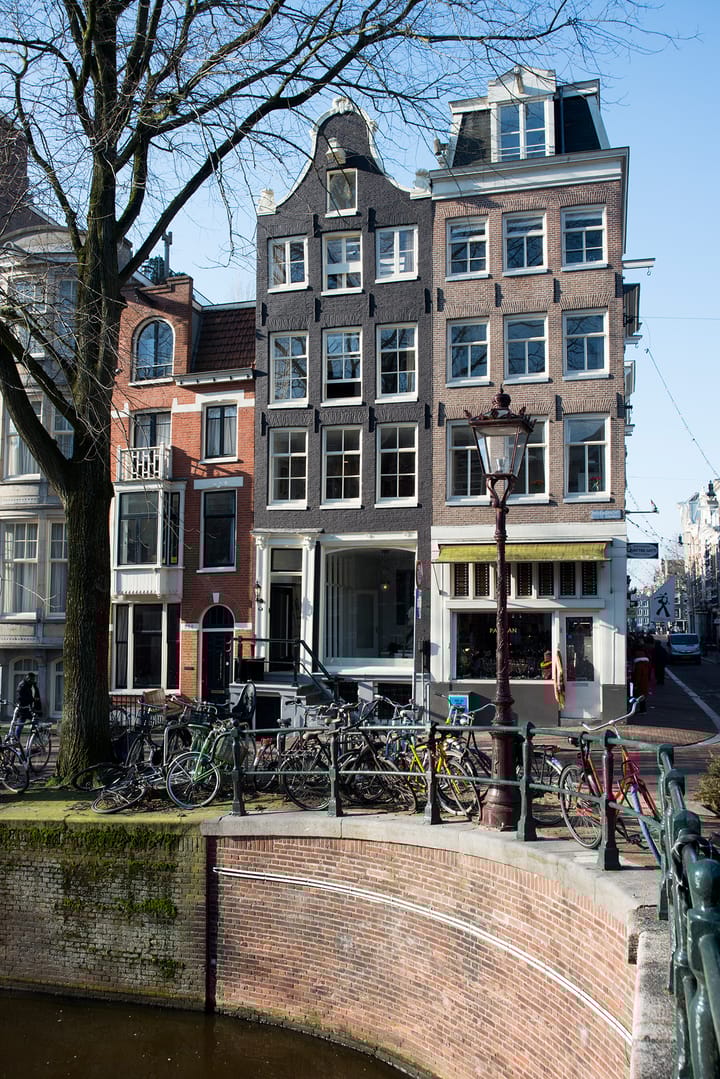
Bij de aanleg van dit deel van de grachtengordel in 1612 werd bepaald dat de erven aan de gracht bedoeld waren voor wonen en de erven in de dwarsstraten voor winkels en bedrijven. De kavels in de dwarsstraten waren relatief erg duur. Dit had te maken met de bebouwingsmogelijkheden: in tegenstelling tot de grachtenkavels mocht het gehele perceel worden bebouwd maar de maximale bouwhoogte was beperkt. De kavels aan de gracht waren veel groter maar mochten maar voor een deel worden bebouwd; de rest was bestemd voor tuinen. Het wonen aan de gracht kostte geld en de winkels in de dwarsstraten leverden geld op was de gedachte. De hoekerven, zoals het erf waarop Herengracht 236 is gebouwd, waren door hun ligging zeer geschikt voor commerciële functies en waren zelfs nog duurder per vierkante meter dan de erven in de straten en aan de grachten[1]. De huizen op de hoekerven hebben geen achtergevel; alleen een voorgevel. Dat maakt Herengracht 236 vandaag de dag tot een bijzonder pand. Want wat een uitzicht en dat op alle verdiepingen! Ook is het een voordeel dat het hele pand één woonhuis huis, geen boven- of onderburen en geen VVE.
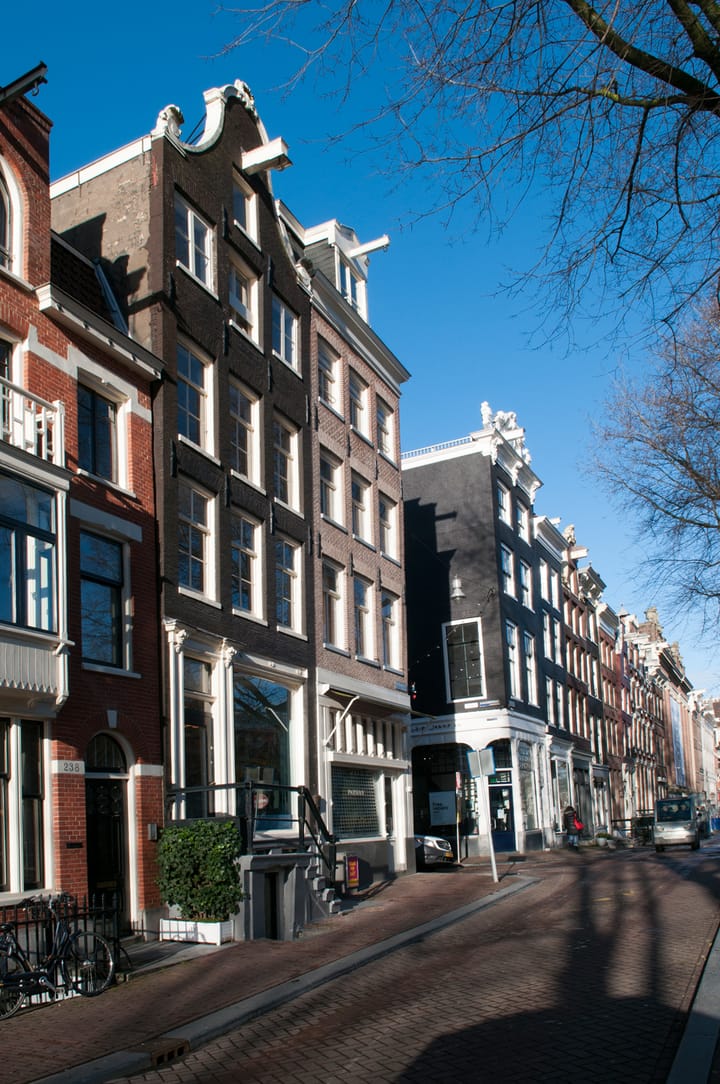
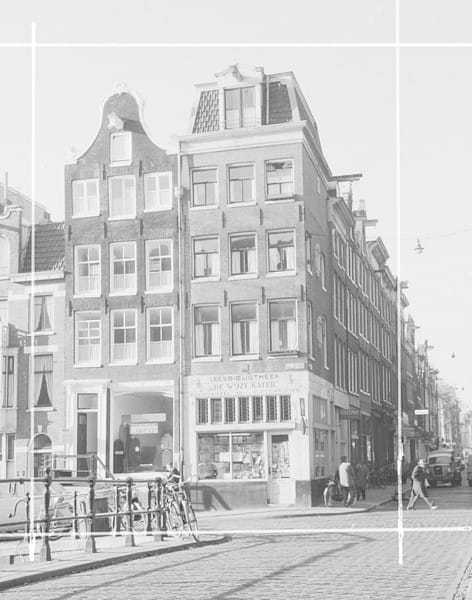
Het oorspronkelijk 17e -eeuwse pand met halsgevel is te zien op de tekening van Caspar Philips. In de 18e eeuw is het samen met buurpand nr 234 ingrijpend verbouwd voor een banketbakker. De onderpui is in 1899 aangepast waarbij de twee ramen op de beletage zijn gewijzigd tot de grote etalageruit die nu nog aanwezig is. Hoewel de gevel in de loop der tijd is aangepast, met name voor wat betreft de raamverdeling, is de 17e -eeuwse opzet nog herkenbaar. Bijvoorbeeld de opgang met stoep en de indeling souterrain en beletage. Ook is nog de pakhuisfunctie van de zolder goed herkenbaar aan het grotere midden raam op de bovenste verdieping dat vroeger een hijsluik is geweest, de hijsbalk en de restanten op de zolder van het hijswiel.
Er zijn twee ingangen voor het pand; via het souterrain of via de stoep. In de trap naar het souterrain is goed te zien hoe in het verleden de straat steeds is opgehoogd. Mooi detail is de uitsparing in de hardstenen stoepplaat om je hoofd niet te stoten. Van oudsher is het souterrain de plek van de keuken en deze zou hier nu ook weer mooi geplaatst kunnen worden. De op zijn kant geplaatste balken met daartussen de houten vloerdelen van de verdieping geven de ruimte een extra historisch karakter. Via een moderne trap vanuit het souterrain is de beletage te bereiken. Deze verdieping is voorzien van een eenvoudig met net mooi gedetailleerd rookkanaal en dito plafond passend bij de eind 19e -eeuwse gevelindeling, waar veel licht door naar binnen valt. Hier ligt eenzelfde moderne tegelvloer als in het souterrain.
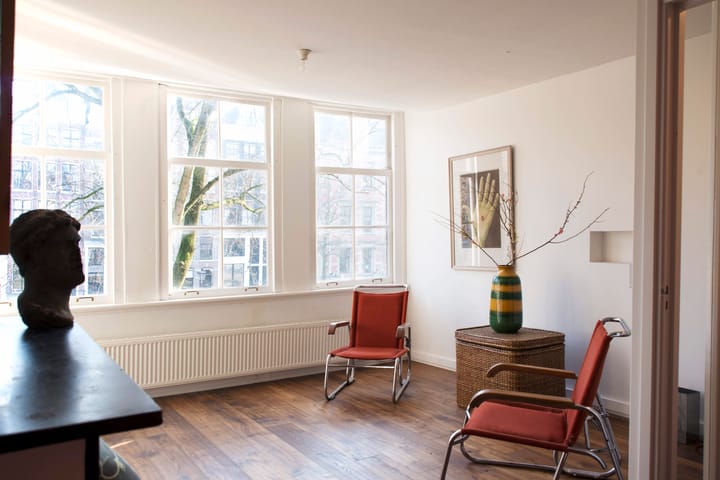
Via de nog 17e -eeuwse spiltrap met ronde houten spil en prachtige afgeronde treden zijn de overige verdiepingen te bereiken. Aan de onderzijde is de trap afgewerkt met plaatmateriaal en op de treden ligt vloerbedekking maar daaronder liggen de oude houten treden die weer in het zicht gebracht zouden kunnen worden. Op de eerste verdieping geven de roederamen een fantastisch gevoel van verbondenheid met de straat. De verhouding van hoogte, breedte en diepte van de ruimte en de eenvoudige zwarte schouw in het midden van de zijmuur creëren een hele prettige sfeer en maken deze verdieping geschikt als woonkamer.
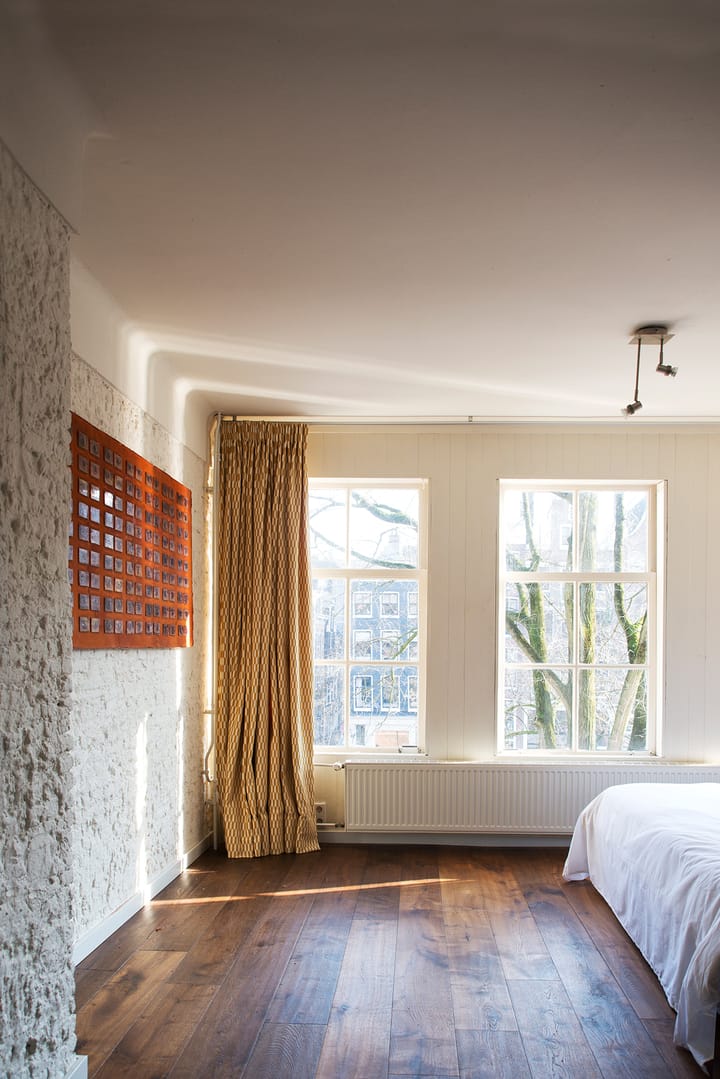
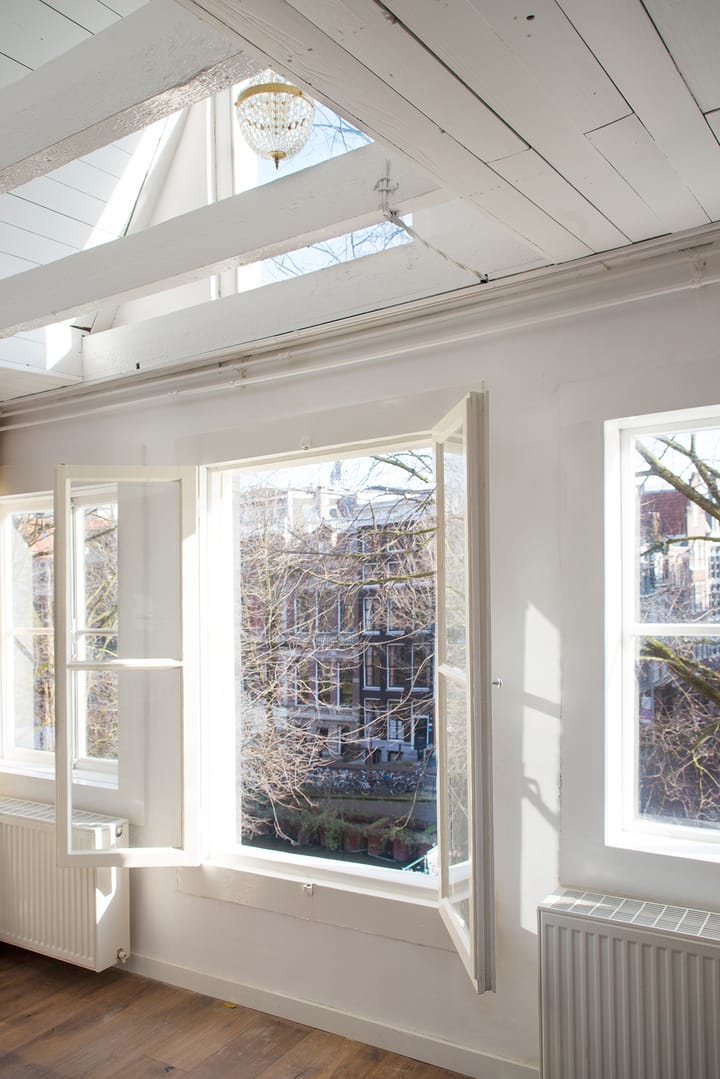
De eenvoudige tweede verdieping met weer fantastisch uitzicht op de gracht zou verbouwd kunnen worden tot een slaapkamer met badkamer. De bovenste zolderverdieping heeft een witgeschilderde ziende bekapping met interessante delen van de kapconstructie. De pakhuisfunctie is herkenbaar aan het grotere midden raam en het hijswiel in de nokbalk. Door de schuine kap met veel daklichten is dit een hele lichte ruimte en hier bevindt zich nu de keuken. Let op het grappige raam in de zijgevel die het trappenhuis zou kunnen aanlichten.
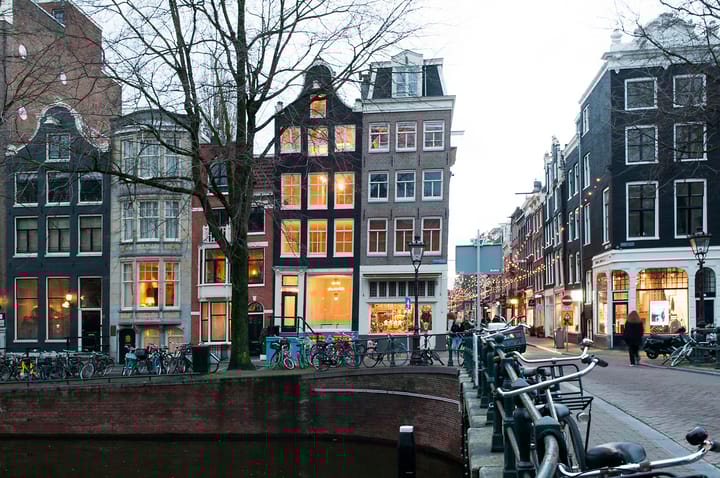
Als je via de voordeur op de beletage dit Rijksmonument (nr 1779) weer verlaat, ga dan even op het bankje op de stoep zitten. Dit is de ideale plek om in de zomer buiten te zitten. Om de hoek is de Hartenstraat, één van de beroemde 9 straatjes, waar veel winkeltjes, cafétjes, koffiebarretjes en restaurantjes zitten. In dit deel van het UNESCO werelderfgoed gebied is al vanaf begin 17e eeuw altijd wat te doen.
Volgens de NEN-meting beslaan de bel-etage, eerste-, tweede en derde verdieping 88,40 m². Het souterrain voegt hier nog zo'n 21 m² woonruimte aan toe, waardoor het totale woonoppervlak op 110 m² komt. Het souterrain is niet meegenomen in de NEN-berekening omdat de huidige hoogte 1,91m bedraagt (gemeten van vloer tot balk, 9 centimeter minder dan de vereiste 2,0m). Indien gewenst kan de vloer worden verlaagd om het souterrain alsnog in de NEN-berekening op te kunnen nemen.
Onderzoek en tekst: Ir. Nanette de Jong in opdracht van Brinkman Fine Real Estate.
*** English***
Herengracht 236 – Sanctuaries of Sight
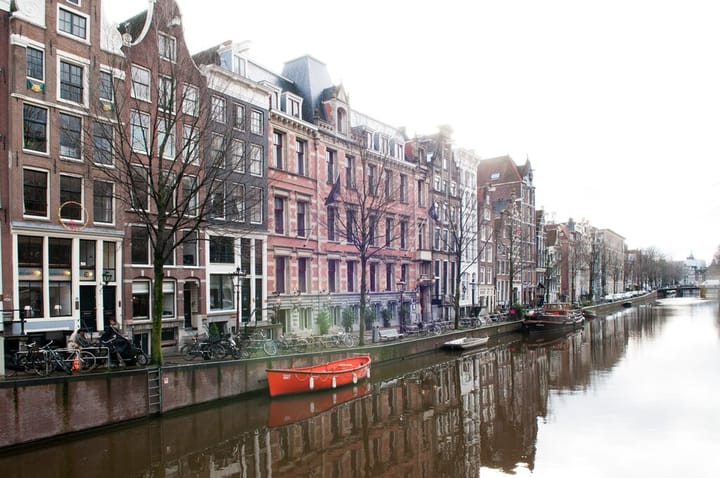
When this part of the canal belt was built in 1612, it was determined that the yards along the canal were intended for housing and the yards in the cross streets for shops and businesses. The lots in the side streets were relatively very expensive. This had to do with the building possibilities: unlike the canal lots, the entire plot could be built on, but the maximum building height was limited. The plots on the canal were much larger, though could only be partly built upon; the rest was for gardens. Living on the canal cost money and the shops in the side streets yielded money, it was thought. The corner yards, such as the yard on which Herengracht 236 is built, were very suitable for commercial functions due to their location and were even more expensive per square metre than the yards in the streets and along the canals. The houses on the corner yards have no rear façade; only a front façade. That makes Herengracht 236 a special building today. And what views from all the floors! It is also an advantage that the entire building is one private house, no neighbours above or below and no Association of Owners (VVE). This property has a mixed-use designation, meaning that it is officially designated for both residential and commercial/business use.
The original 17th-century building with its neck gable can be seen in the drawing by Caspar Philips. In the 18th century, it was radically renovated, together with neighbouring building, No. 234, for a pastry chef. The bottom façade was adapted in 1899, whereby the two windows on the bel-etage were changed into the large display window that is still present. Although the façade has been adapted over time, particularly with regard to the window division, the 17th-century layout is still recognisable. For example, the entrance from the stoop, and the layout of the souterrain and bel-etage. The warehouse function of the attic is also clearly recognisable by the larger middle window on the top floor that used to be a hoisting hatch, the hoisting beam, and the remains of the hoisting wheel in the attic.
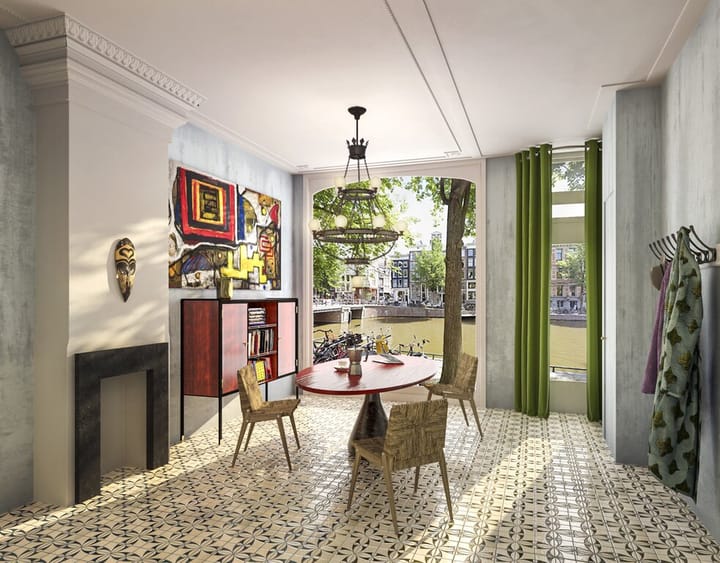
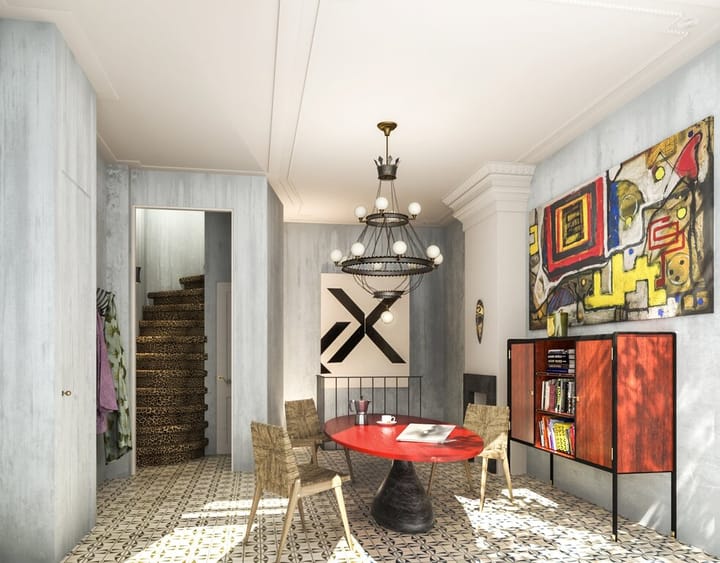
There are two entrances to the property; via the souterrain or via the stoop. In the stairs to the souterrain, you can clearly see how the street has been raised in the past. A nice detail is the recess in the blue-stone slab to avoid bumping your head. Traditionally, the souterrain is the place for the kitchen and it could now also be nicely placed here. The beams placed on its side with the wooden floor parts of the first floor in between give the space an extra historical character. The bel-etage can be reached via a modern staircase from the souterrain. This floor has a simple, nicely detailed flue and ceiling, matching the late 19th-century façade layout, which allows a lot of light to enter. Here is the same modern tiled floor as in the souterrain.
The other floors can be reached via the 17th-century spiral staircase with a round wooden spindle and beautiful curved and angled steps. The staircase is finished with sheet material and the steps are carpeted, but underneath are the old wooden steps that could be brought back into view. On the first floor, the three windows give a fantastic feeling of connection with the street. The ratio of height, width and depth of the room and the simple black fireplace in the middle of the side wall create a very pleasant atmosphere and make this floor suitable as a living room.
The simple second floor with fantastic views of the canal could be converted into a bedroom with bathroom. The upper attic floor has a white-painted visible roof with interesting parts of the roof construction. The warehouse function can be recognised by the larger centre window and the hoisting wheel in the ridge beam. The sloping roof with many skylights makes this a very light space; the kitchen is currently located here. Note the funny window in the side wall that could light up the stairwell.
If you leave this national monument (no. 1779) through the front door on the bel-etage, take a seat on the bench on the stoop. This is the ideal place to sit outside in the summer. Around the corner is the Hartenstraat, one of the famous 9 streets, with many shops, cafés, coffee bars and restaurants. There has always been something to do in this part of the UNESCO World Heritage area since the early 17th century.
Please note the bel-etage, first- second- and third floor of the property were measured at 88,40 m² in line with NEN regulation. However, the souterrain counts for an additional usable living space of about 21 m², which is why the property is marketed at 110 m². The souterrain was excluded from the NEN measurements because of its current height at 1,91m (measured floor to beam, 9 centimeters short of the required 2,0m). If desired, it is possible to remove this from the floor ceiling in order to include the souterrain in the NEN calculation.
Research & text: Ir. Nanette de Jong assigned by Brinkman Fine Real Estate.
Kenmerken
Overdracht
- Laatste vraagprijs
- € 1.150.000 kosten koper
- Vraagprijs per m²
- € 10.455
- Status
- Verkocht
Bouw
- Soort woonhuis
- Grachtenpand, tussenwoning
- Soort bouw
- Bestaande bouw
- Bouwjaar
- 1612
- Specifiek
- Monument en monumentaal pand
- Soort dak
- Samengesteld dak
Oppervlakten en inhoud
- Gebruiksoppervlakten
- Wonen
- 110 m²
- Perceel
- 25 m²
- Inhoud
- 360 m³
Indeling
- Aantal kamers
- 5 kamers (2 slaapkamers)
- Aantal badkamers
- 1 badkamer en 3 aparte toiletten
- Badkamervoorzieningen
- Douche
- Aantal woonlagen
- 4 woonlagen en een kelder
Energie
- Energielabel
- Niet verplicht
- Verwarming
- Cv-ketel
- Warm water
- Cv-ketel
Kadastrale gegevens
- AMSTERDAM E 3841
- Kadastrale kaart
- Oppervlakte
- 25 m²
- Eigendomssituatie
- Volle eigendom
Buitenruimte
- Ligging
- Aan water en in centrum
Parkeergelegenheid
- Soort parkeergelegenheid
- Betaald parkeren, openbaar parkeren en parkeervergunningen
Foto's 24












© 2001-2025 funda