
Studler van Surcklaan 171861 MA Bergen (NH)Geest
€ 1,800,000 k.k.
Eye-catcherVilla "De Boschkant"
Description
VILLA “DE BOSCHKANT”
.
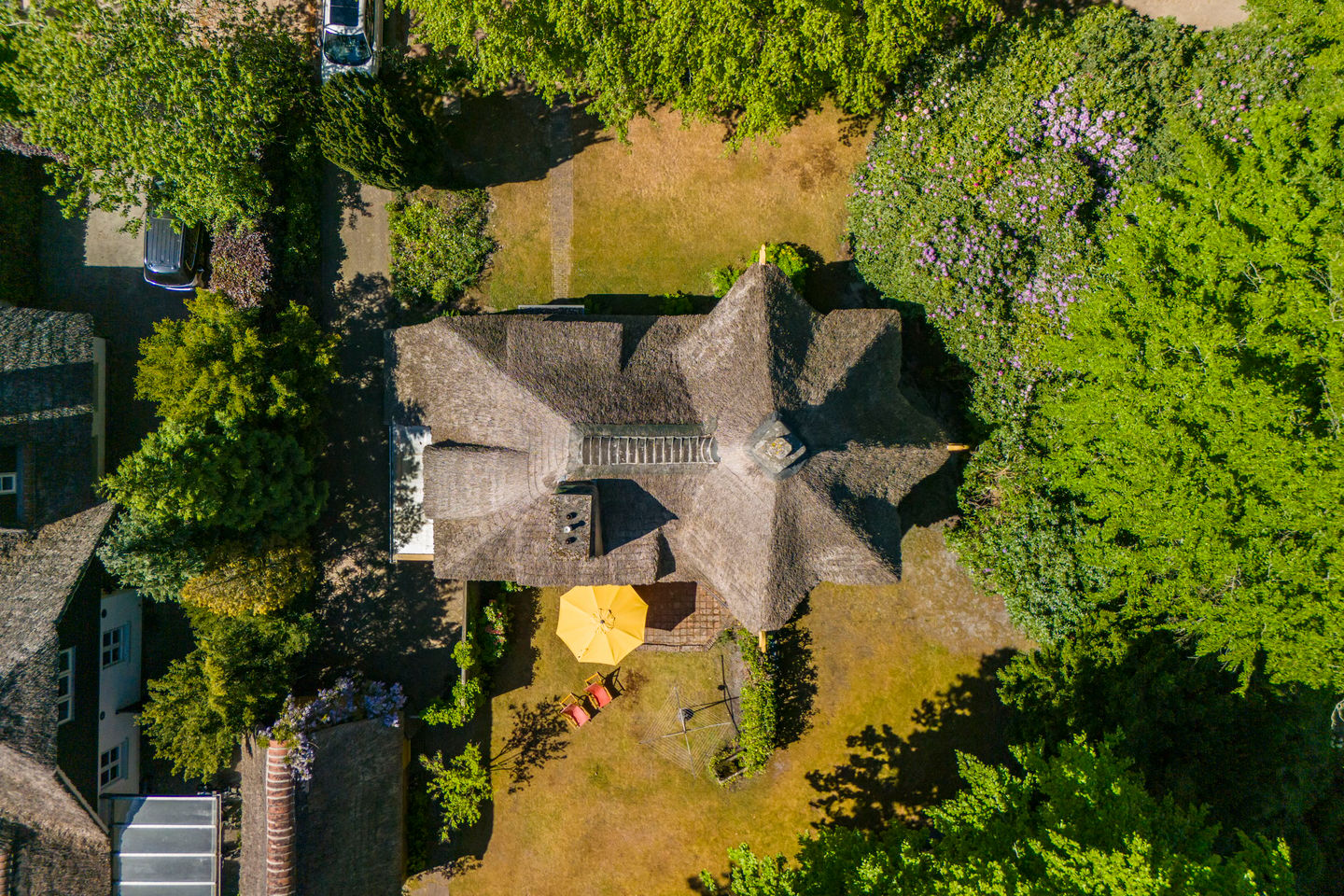
Villa ‘De Boschkant’ at Studler van Surcklaan 17 in Bergen is among the early highlights of the Amsterdam School. This listed national monument was built in 1918 as part of Park Meerwijk, a visionary development where a select group of architects were given the freedom to experiment with expressive forms in a landscaped setting. Seventeen homes, designed by architects including Michel de Klerk, Piet Kramer, Margaret Staal-Kropholler and Cornelis J. Blaauw, mark this ensemble as a milestone in Dutch architectural history. Blaauw designed three villas for the plan, including this one.
‘De Boschkant’ stands out with its striking form and unique layout. The house is built around an arrow-shaped floorplan: a wide front section for the living areas and a narrower rear for the service wing and bedrooms. This results in a clear, asymmetrical structure with a natural spatial rhythm.
The architecture is exemplary of the Amsterdam School: expressive brickwork, curved facades, artisanal woodwork, a weatherboarded attic level, and a thatched tent roof. Detailing is refined and rich. The ochre-yellow bay windows, wedge-shaped balconies, buttresses, carved gutter blocks and scalloped ornaments create a lively and characterful facade. Horizontal glazing bars and profiled window frames on the north and southeast sides enhance rhythm and light.
Inside, the architecture continues seamlessly. Stained glass windows, beamed ceilings, original tiled floors and timber stair elements have been carefully preserved or skilfully restored. In 1991, the current owner carried out a thorough yet respectful restoration. The original layout remained central; detailing was supplemented where needed without compromising the style.
The villa offers approximately 150 m² of living space and stands on a spacious plot of 1,220 m². A charming detached garden house of approx. 27 m² currently serves as studio and guest accommodation. An attached shed completes the ensemble.
‘De Boschkant’ reflects the ideal of living as a form of cultural expression. For those who value thoughtful architecture, smart layout and a home with history, this house offers something rare: character with substance.
THE TOUR
The entrance of Villa ‘De Boschkant’ is centrally located at the front. The large ochre-yellow door, with small stained-glass windows on either side, a modest canopy and a grotesque door knocker, gives the house immediate charm and presence.
One enters a spacious vestibule, where colour use and stained glass create a vibrant, warm welcome. Original diamond-patterned mosaic tiles immediately catch the eye. The toilet is to the right, the meter cupboard to the left. Straight ahead is the kitchen, while a central hall on the left leads past the main living areas.
The kitchen is the heart of the house. As was common at the time, the villa was designed with space for household staff. A separate room for the housekeeper was situated at the back, adjacent to the kitchen, above the cellar and with its own entrance. This reflects early 20th-century domestic logic: clear, functional and hierarchical. Today, the kitchen is the home's social hub. The former service area has been merged into a generous space with outdoor views and room for cooking, dining and gathering.
Original features have been preserved with care. A bedstead niche with built-in bench, reused wall tiles and wooden elements give the space character. The kitchen is simple yet substantial, with a new granite worktop, large porcelain sinks and paneled wooden cabinets—true to the original spirit but in a contemporary variant. A gas-fired AGA completes the nostalgic feel. Beneath the kitchen is a full-height, dry cellar (2.29 m) of about 6 m²—ideal for storage, wine or preserves.
The kitchen adjoins the lounge and dining room. The original panel door, painted in yellow, green and light green with Amsterdam School detailing, is a work of art. Even the hardware is thoughtfully designed. French doors open to the deep, south-facing garden.
Beyond this is the spacious living room, featuring the original fireplace and a stunning beamed ceiling with scalloped edges in contrasting black, ochre and yellow. This rhythm and colour give the ceiling a distinctive character. French doors open onto the garden. A door to the right of the fireplace leads to the central hall, where the stairs go up and a hatch gives access to the attic.
UPSTAIRS
The staircase is a work of art. Its graceful black railing with detailed newel post is supported by elegantly shaped balusters. A landing halfway up adds an elegant transition to the upper floor.
The first floor includes four bedrooms, each with built-in wardrobes. The landing connects all rooms. At the front is a bathroom of about 5 m² with bath, shower, sink and toilet. Opposite is a narrow room of about 10 m²—ideal as a study or small bedroom—with access to the distinctive wedge-shaped balcony.
At the rear are three bedrooms. The largest, nearly square at approx. 18 m², has two balconies and a built-in wardrobe dating from 1918. Extra corner windows bring in plenty of daylight. The second bedroom overlooking the garden is approx. 7.5 m² with a double closet. The third bedroom measures approx. 14 m² and, with two windows, is also light and spacious.
ATTIC
A retractable ladder leads to the attic, revealing the impressive open roof structure beneath the original thatched roof.
OUTBUILDINGS
Attached to the house is a practical storage room, now in use as laundry space with washer and dryer connections. Its location under the west-facing canopy also makes it ideal for an outdoor kitchen or garden room.
At the rear of the plot is a charming detached guesthouse with thatched roof, approx. 27 m². On the ground floor are a sitting area, compact kitchenette and a separate bathroom with shower and toilet. The ground floor retains original elements: visible beams, untreated timber and deep red window frames add colour and warmth.
A quarter-turn staircase leads to the upper level, with two cosy sleeping areas clad in nostalgic 1970s wooden paneling. An attached shed offers extra storage and matches the main house in style and material.
BERGEN – ACCESSIBILITY & AMENITIES
The location in the artists' village of Bergen is as special as the architecture. For over a century, Bergen has attracted artists, writers and thinkers. The village offers nature, tranquillity and a vibrant cultural life with galleries, museums (including Museum Kranenburgh), music, literature and design. The atmosphere is free-spirited, independent and creative—and it shows.
Though Bergen feels self-contained, it is easily accessible. By car, it is about 10 minutes from Alkmaar, and cities like Amsterdam, Haarlem and Schiphol can be reached in 40 to 50 minutes via the N9. Alkmaar station has direct trains to Amsterdam Central, Utrecht and The Hague. There are also good bus connections between Bergen and Alkmaar. The village has ample amenities, including schools, shops, sports clubs, restaurants and natural surroundings.
CORNELIS BLAAUW & WENDINGEN MAGAZINE
Villa ‘De Boschkant’, designed by Cornelis J. Blaauw, is a listed monument and truly one of a kind. Blaauw (1885–1947) was a Dutch architect and key figure in the Amsterdam School. In Park Meerwijk, he designed three villas, including ‘De Boschkant’. His work is known for expressive forms, artisanal detailing and the use of brick, wood and thatch. Noteworthy is the arrow-shaped floorplan: a broad front for the living areas and a narrower rear for the service wing and bedrooms. This structure gives the house its spatial rhythm and subtle tension.
Blaauw later worked for the Government Buildings Agency, designing laboratories for the agricultural university in Wageningen. He also contributed to the Minervaplein in Amsterdam and several town halls. He taught architecture, was active in Architectura et Amicitia and was an editorial member of *Wendingen*, the influential architectural magazine that featured Villa ‘De Boschkant’ shortly after completion (August 1918) as a prime example of the Amsterdam School.
LISTED MONUMENT
This property is officially listed as a national monument. While some assume this limits possibilities, small maintenance that does not alter the monument—like repainting in the same colour—is always allowed. Larger works, such as structural changes or roof alterations, require a permit. The Dutch Cultural Heritage Agency prioritises preservation, and active occupation is the best form of stewardship.
STRUCTURAL REPORT, SUSTAINABILITY ADVICE & HISTORIC ANALYSIS
A full structural survey has been conducted. This provides a clear and realistic overview of the current condition and potential repair costs. Reports are available upon request.
SUSTAINABILITY FROM G TO C LABEL
Redres is committed to helping future owners of historic and industrial heritage improve sustainability. While these buildings are inherently sustainable from a circularity perspective, energy use can often be significantly improved.
Alongside the standard energy label, a tailor-made Verduurzamingslabel® (Sustainability Label) has been drawn up. This outlines a pathway to move from the current G label to a potential C label. The advice includes investment estimates and takes into account the building’s heritage status. It offers a valuable guide at a key decision moment—the purchase or sale of a listed building.
Recommended measures include:
* replacing the ground floor with an insulated concrete floor with underfloor heating;
* cavity wall insulation (after further investigation);
* installing secondary glazing suited to historic frames;
* replacing the heating system with a hybrid solution.
FINANCING & SUBSIDIES FOR LISTED MONUMENTS
Attractive financing is available via the National Restoration Fund (NRF) and other organisations:
Restoration mortgage: low-interest loans up to €300,000 (1.5%) for conservation work such as roof, facade, foundation, woodwork or decorative elements.
Sustainability loan: up to €100,000 extra (1.5%) for measures like insulation, HR++ glass, solar panels and hybrid heat pumps, when allowed.
Homeowner grant: private owners may receive 38% subsidy for restoration costs up to €70,000. Additional applications are possible for higher investments.
These options make the preservation and sustainable use of heritage properties financially feasible.
Learn more: [) and [)
IN SHORT
Villa ‘De Boschkant’ is far from ordinary. It is a residence of character, history and depth. Those who live here choose a place where architecture, heritage and artistic freedom meet. A home for those who value beauty, design and meaning.
Yet it is also a warm family home. A place to live, grow, cherish and make memories. Timeless yet classic, with intimate spaces and room for togetherness. For those who appreciate craftsmanship, atmosphere and a home with soul. ‘De Boschkant’ was built with vision, preserved with care, and is ready for a new chapter with those who recognise its quality.
Features
Transfer of ownership
- Listed since
- Acceptance
- Available in consultation
- Asking price
- € 1,800,000 kosten koper
- Asking price per m²
- € 10,056
- Status
- Available
Construction
- Kind of house
- Villa, detached residential property
- Building type
- Resale property
- Year of construction
- 1918
- Specific
- Heritage listed, listed building (national monument) and monumental building
- Type of roof
- Combination roof covered with cane
Surface areas and volume
- Areas
- Living area
- 179 m²
- Other space inside the building
- 21 m²
- Exterior space attached to the building
- 14 m²
- External storage space
- 14 m²
- Plot size
- 1,220 m²
- Volume in cubic meters
- 687 m³
Layout
- Number of rooms
- 9 rooms (6 bedrooms)
- Number of bath rooms
- 2 bathrooms and 1 separate toilet
- Bathroom facilities
- Bath, 2 toilets, sink, and shower
- Number of stories
- 4 stories and a loft
- Facilities
- Optical fibre, passive ventilation system, and flue
Energy
- Energy label
- Heating
- CH boiler
- Hot water
- CH boiler
- CH boiler
- Intergas Kombi Kompakt (gas-fired combination boiler from 2002, in ownership)
Cadastral data
- BERGEN NOORD HOLLAND A 1997
- Cadastral map
- Area
- 1,220 m²
- Ownership situation
- Full ownership
Exterior space
- Location
- On the edge of a forest, alongside a quiet road, sheltered location, in wooded surroundings and in centre
- Garden
- Surrounded by garden
- Balcony/roof terrace
- Balcony present
Storage space
- Shed / storage
- Detached brick storage
- Facilities
- Loft, electricity, heating and running water
Parking
- Type of parking facilities
- Parking on private property
© 2001-2026 funda